
Can You Cement Render Over Timber
If you’re looking to restore the interior or exterior of your home or property, you may be wondering if it’s possible to add cement rendering over timber. Can you have cement render applied over timber beams, wood cladding, plywood, particle board, and other wood materials? Find out in this article from Zaks Render!
It’s Possible To Cement Render Over Timber, But It’s A Complex Process
Can you render over wood?
The short answer is “yes.” It is usually possible to cement render over timber. However, this is typically a very time-consuming and difficult process. Let’s assume you want to render over a large piece of plywood, for example.
The render mix cannot be applied directly to the plywood, as wood is not an ideal substrate for cement render. It’s not waterproof, so it may warp and bend as it absorbs water from the render.
To avoid this, you must apply render carrier boards to the plywood, but these can’t be applied directly to the plywood either, since there must be a gap between the two materials to allow for proper ventilation.
The best course of action is to prepare the surface, then install a breather membrane onto your plywood, then install timber battens and render carrier boards on top. Finally, the carrier boards must be sealed using carrier board tape.
Then, finally, the cement render can be applied to the carrier boards, and you can begin rendering the wall. As you can probably tell, this is a lot of work – and can make the project very expensive indeed.
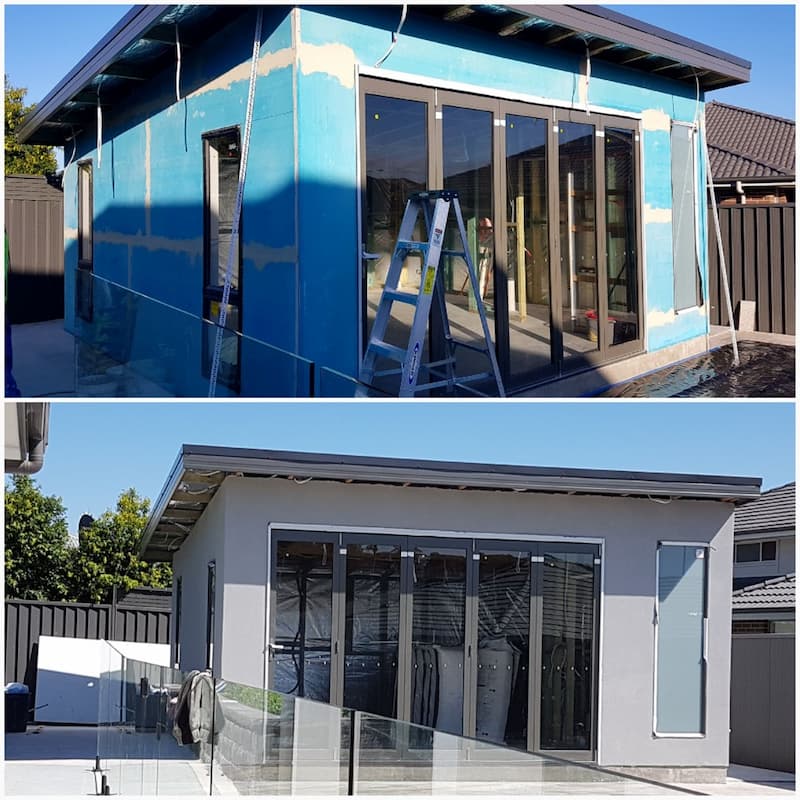
In the context of home renovations, the use of cement render over timber surfaces, though feasible, necessitates a thoughtful approach to ensure durability and aesthetic appeal. The process, often complex and meticulous, involves a series of steps to simply render the wood suitable for this application. It’s imperative to consider the long-term effects, particularly how the timber’s natural expansion and contraction will interact with the render, possibly affecting its integrity over time. This calls for strategic planning and the use of appropriate materials to bridge these differences, ensuring a seamless and enduring enhancement to the property.
Acrylic Render Is A Better Product For Timber And Other Surfaces
In most cases, we will only recommend using cement render on natural stone and brick. These materials are absorbent and bond tightly to the cement used in the render material – all you have to do is prepare the surface and apply the render, with minimal installation complexities.
In contrast, it should not be used on painted walls, timber, and other such surfaces. For these purposes, acrylic rendering, another type of render, is far superior. Acrylic render uses plastic instead of cement as part of its mix – leading to a much more flexible, lightweight, and strong render material.
Despite this, however, it maintains the unique look and style of cement render. This makes acrylic render a great option if you want to render your interior or exterior walls, and they’re made of materials other than stone and brick.
You should not, however, that acrylic render still should not be applied directly to timber, weatherboard, and other materials. You will still need to prepare the surface by adding mesh or a similar substrate, and ventilation will also be essential to prevent moisture from damaging the wood after the render has been applied.
Step-by-Step: How to Prepare Timber for Rendering
As outlined above, rendering over timber is not a straightforward process. Proper preparation is absolutely critical to achieving a result that is durable, stable, and visually consistent. Skipping or rushing any of these steps is one of the most common reasons rendered timber walls fail prematurely. Here is a step-by-step guide to doing it right.
Step 1: Inspect and Repair the Timber Surface
Before anything else, thoroughly inspect the timber for any signs of rot, warping, or structural damage. Rendering over compromised timber will only lock in existing problems and accelerate further deterioration. Replace or repair any damaged sections before proceeding, and ensure the surface is structurally sound and stable.
Step 2: Clean the Surface
Remove all dirt, dust, grease, mould, and any old paint or coatings from the timber surface. A stiff brush and a suitable exterior cleaner will work well for most situations. Allow the timber to dry completely before moving on to the next step, as any residual moisture can interfere with the materials applied on top.
Step 3: Install the Breather Membrane
A breather membrane (also known as a sarking or vapour-permeable membrane) must be fixed directly to the timber surface. This is a critical layer that allows moisture vapour to escape from the timber while preventing water from penetrating inward. Without it, trapped moisture can cause the timber to swell, warp, and eventually cause the render to crack or delaminate.
Step 4: Fix the Timber Battens
Timber battens are fixed over the breather membrane to create a ventilated cavity between the membrane and the render carrier boards. This gap allows air to circulate behind the render system, which is essential for managing moisture and preventing long-term damage to the underlying timber structure.
What Size Battens Should You Use?
The size of the battens will depend on the specific render system being used. As a general guide:
- Battens are typically 25mm to 50mm in depth to provide adequate ventilation
- They should be treated timber to resist moisture and insects
- Fix battens vertically to encourage airflow from bottom to top
Step 5: Install the Render Carrier Boards
Render carrier boards are fixed to the battens to create the substrate onto which the render will be applied. These boards are specifically engineered to bond with render and provide a stable, even surface. Standard timber, plywood, or particle board are not suitable substitutes, as they do not have the correct surface properties for render adhesion.
Step 6: Seal the Joints with Carrier Board Tape
All joints between carrier boards must be sealed with carrier board tape before any render is applied. This prevents render from cracking along the joint lines and stops moisture from working its way behind the boards. Do not skip this step, as unsealed joints are a common cause of render failure on timber-framed surfaces.
Step 7: Apply the Render
Once the carrier boards are installed and all joints are sealed, the surface is ready for rendering. As noted above, acrylic render is strongly recommended over cement render for timber applications due to its flexibility and superior moisture resistance. Apply the render according to the manufacturer’s instructions, working in even coats and allowing adequate drying time between each layer.
Not sure if your timber surface is suitable for rendering? The team at Zaks Render can assess your project and recommend the most appropriate render system for your specific situation. Get in touch on 0402 283 119 for a consultation.
FAQs about Rendering Timber
Q: Can you put cement render directly on wood?
No. Wood absorbs moisture and moves with temperature, which can cause cement render to crack or detach.
Q: What’s the best render for timber?
Acrylic render is preferred due to its flexibility and moisture resistance.
Q: Can you render weatherboard houses?
Yes, with proper substrate preparation such as render carrier boards or mesh systems.
Q: Is acrylic render as durable as cement render?
Yes—acrylic render often lasts longer on flexible surfaces because it resists cracking.
Q: Why can’t cement render bond well to timber?
Wood is not stable enough for cement render. It moves, absorbs water, and lacks the proper surface structure for a strong bond.
Interested In Rendering Timber Or Wood? Get A Project Assessment From Zaks Render
The best way to know whether acrylic rendering your timber or wood materials is practical is with an assessment from Zaks Render. We’re experts at cement and acrylic rendering in Sydney, and we’ve seen and done it all.
If you have a home improvement project that you think may be difficult or complex, we’re here to help. Get in touch for an assessment, and we can determine if rendering your wall or other area is practical – or if you’d be better off with a different type of surface finish. Contact us online or give us a call at 0402 283 119 to get started.
-

Choosing The Best Paint For Rendered Homes
<span style="font-weight: 400;">Rendered homes are
-

What Paint To Use For Cement Render
Cement render is such a great addition to any hous
-
How To Cement Render A Garden Wall
Interested in a new render finish for your garden